
What are Floating Structures?
This page, curated by Dr. Stefan Huebner (SFSS President), provides an overview of different floating solution types, historically and currently used in aquatic spaces. (The page serves for informational purposes, does not claim to be exhaustive, and the structures being listed here do not equal an endorsement by SFSS.)
Floating Solar Photovoltaic Farms
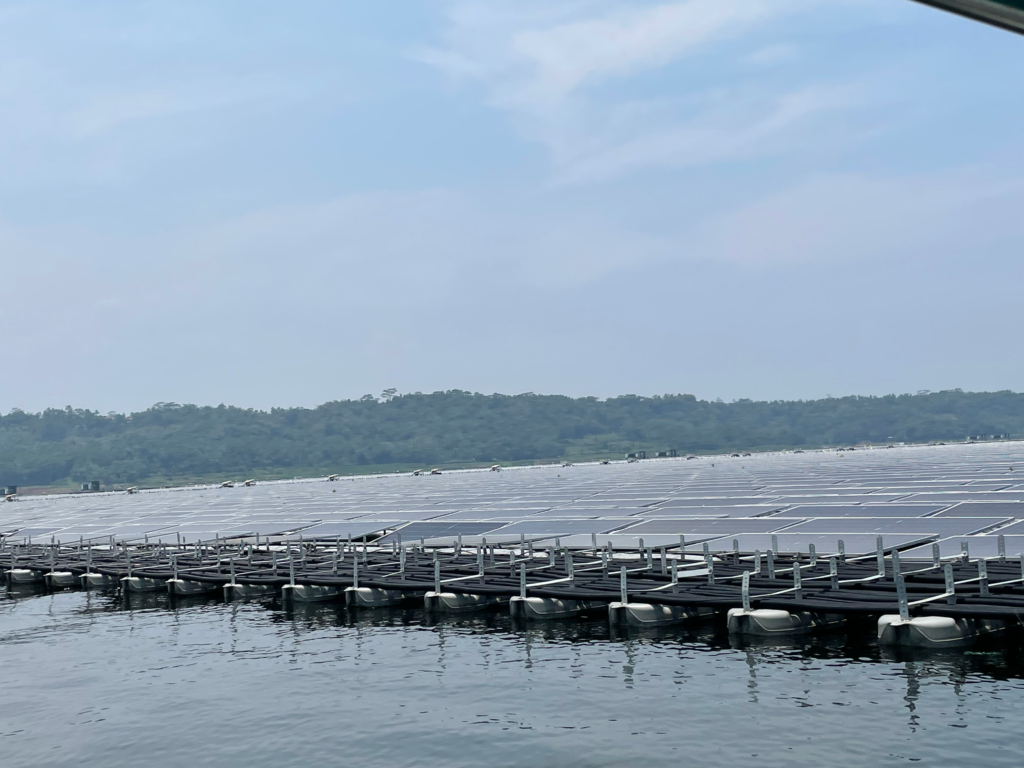
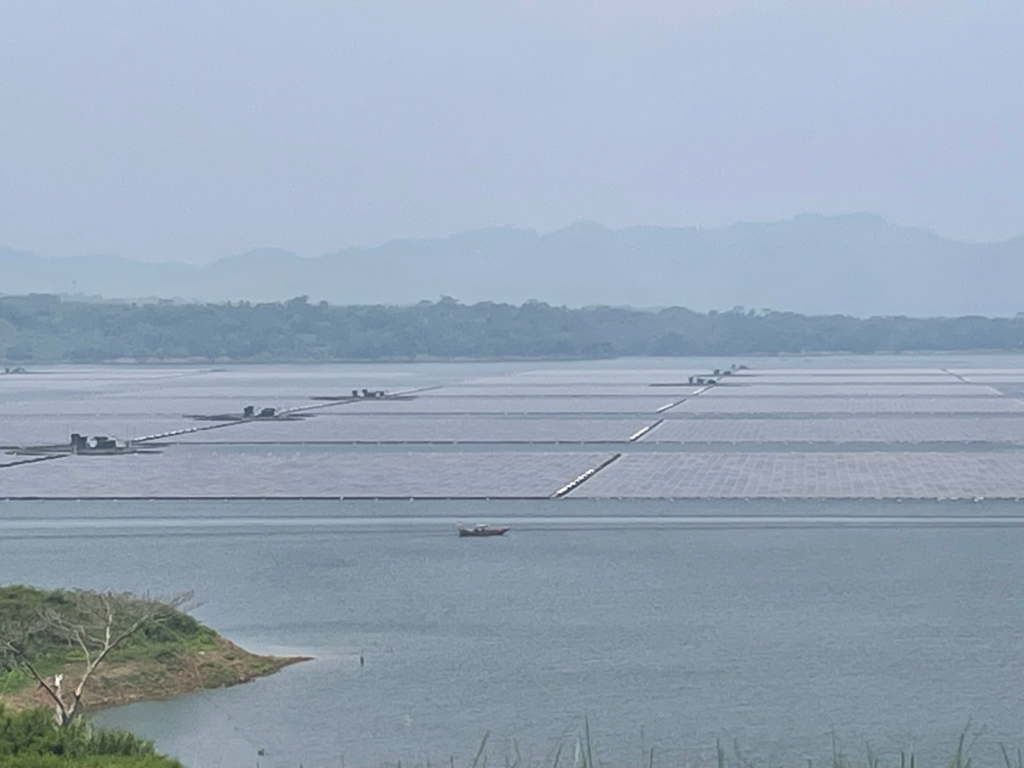
Cirata Floating Solar PV Farm in Indonesia, located in the water reservoir of a hydroelectric dam, generating renewable energy. Photo from 2025. Photo credit: Stefan Huebner
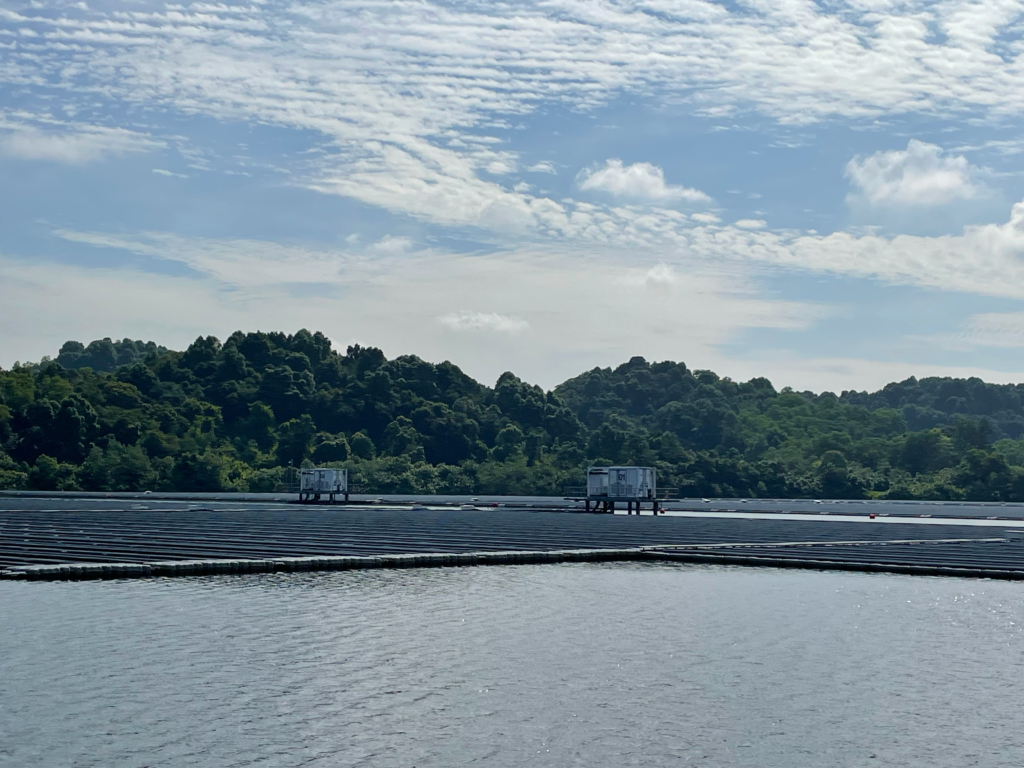
Floating solar PV farm in Singapore’s Tengeh water reservoir. Floating solar PV systems can generate renewable energy and reduce evaporation in reservoirs, helping to save freshwater. Photo from 2025. Photo credit: Stefan Huebner
Floating Energy Storage
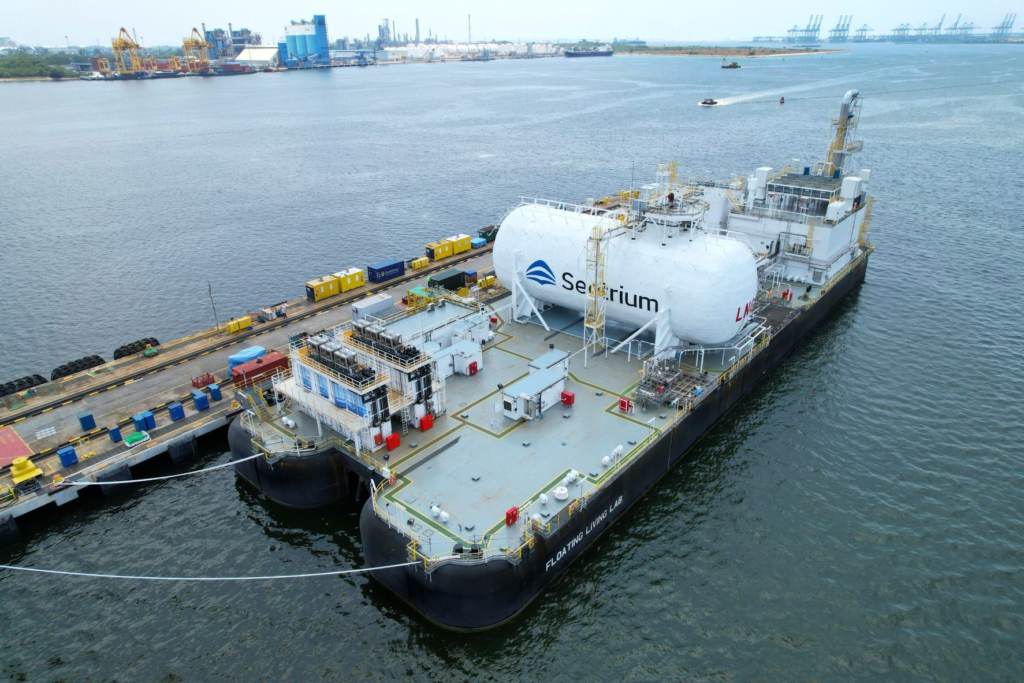
Seatrium Limited’s Floating Living Lab in Singapore, a test site, among other projects, for floating mobile energy storage (batteries for solar energy storage). Photo from 2023. Photo credit: Seatrium Limited
Floating Offshore Wind Farms
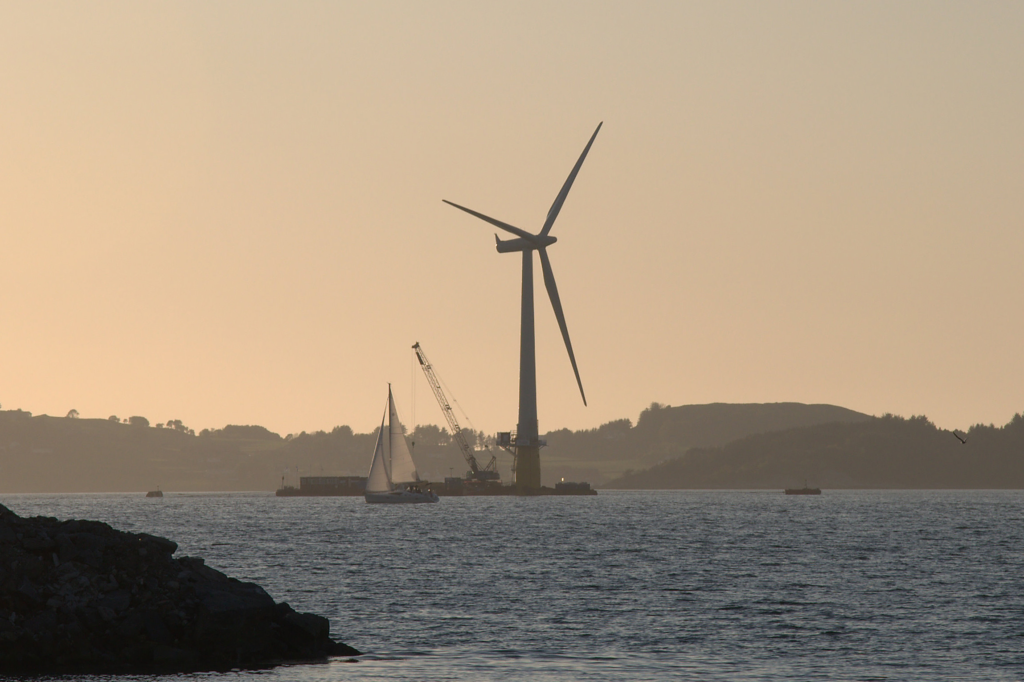
The world’s first full-scale floating wind turbine (Siemens Hywind), assembled near Stavanger, Norway, before deployment in the North Sea in 2009. Floating offshore wind turbines can operate in deeper waters than seabed-fixed turbines. Photo credit: Lars Christopher on Wikimedia

Floating Nuclear Power Plants
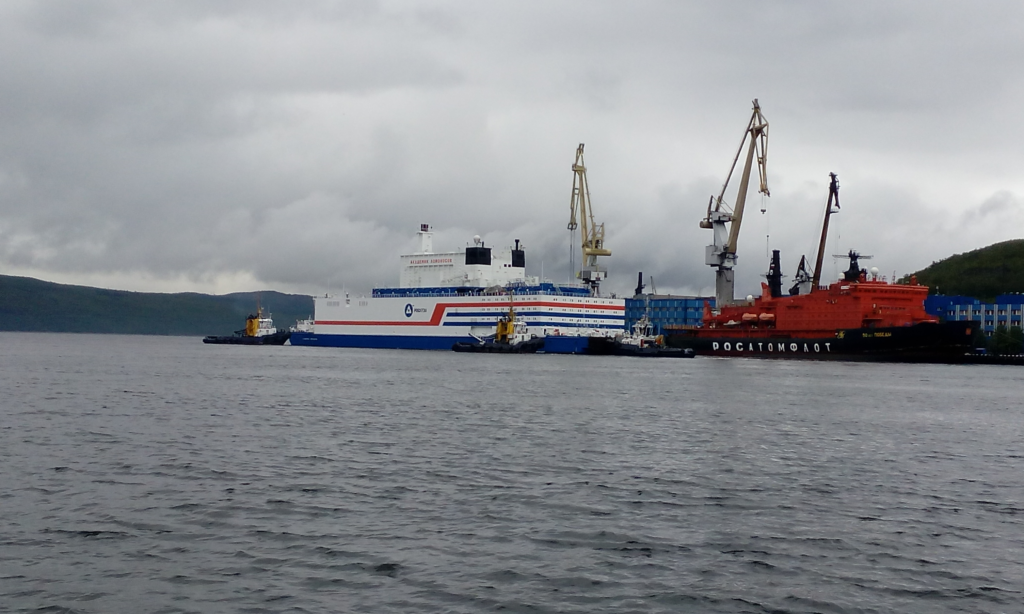
The Akademik Lomonosov (center), a Russian floating nuclear power plant now located in Pevek’s harbor, northeastern Siberia. Like certain submarines and aircraft carriers, the floating structure hosts a nuclear reactor, which provides electricity and heat to the town nearby. The photo shows the power barge still in Murmansk in 2019. Photo credit: Elena Dider on Wikimedia

Floating Fish and Seaweed Farms
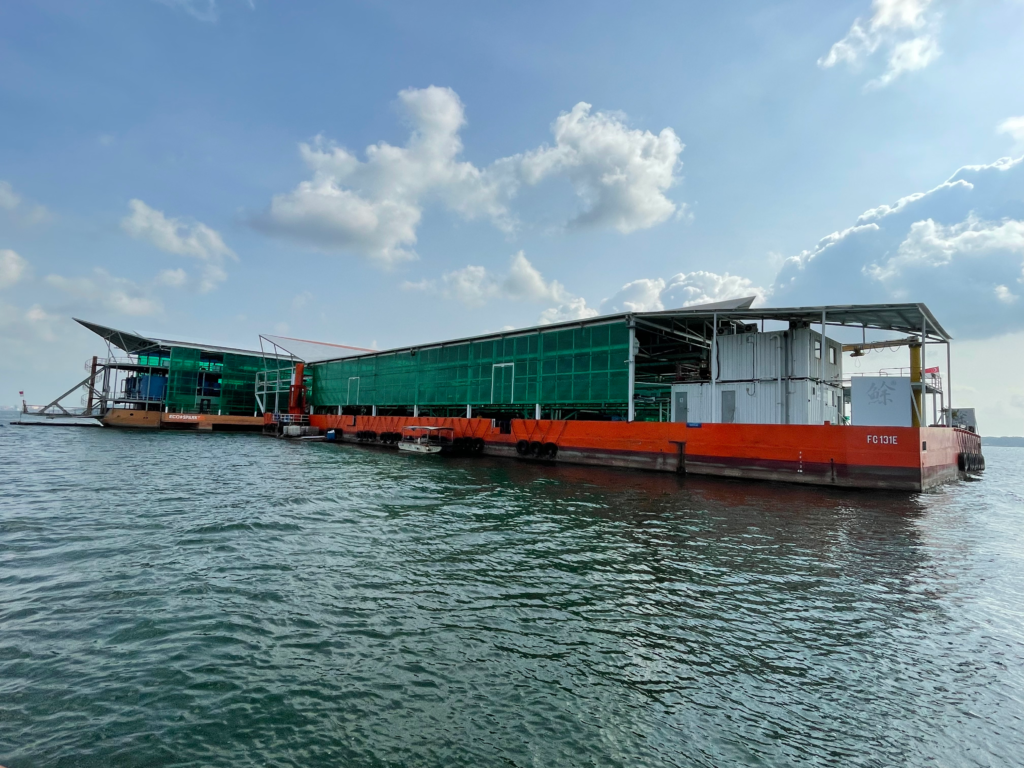
The ACE sustainable floating fish farm in Singapore, a closed system farm that removes pollution during water intake and equally prevents water pollution during release. Photo from 2024. Photo credit: Stefan Huebner
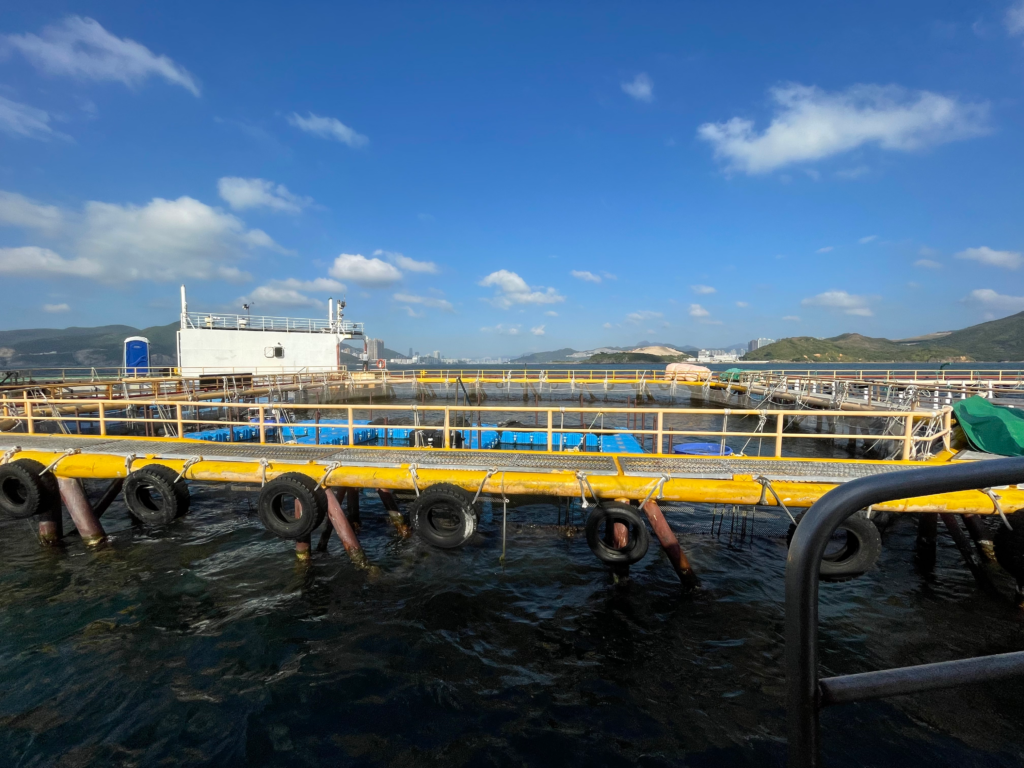
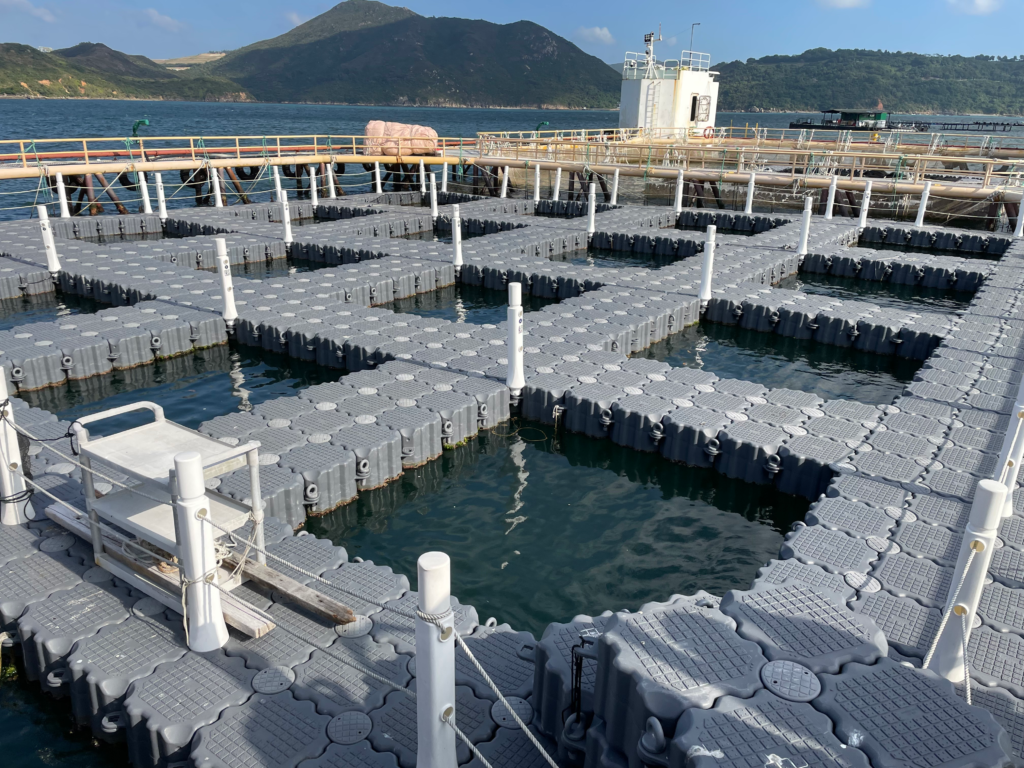
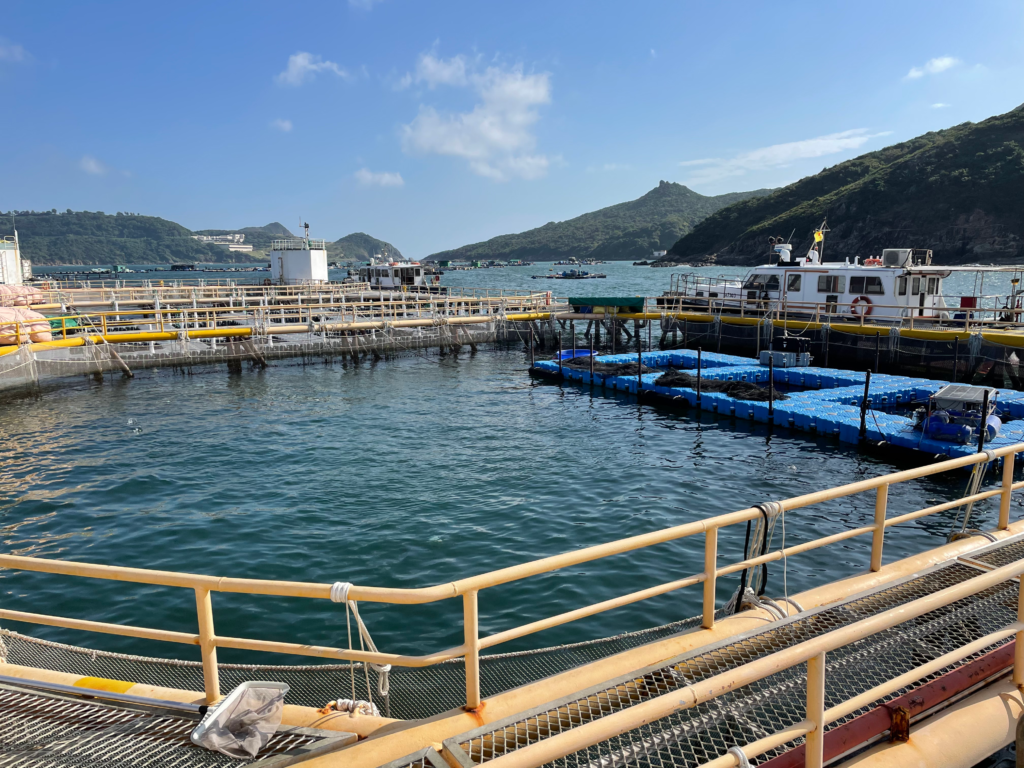
The Agriculture, Fisheries and Conservation Department (AFCD) Floating Fish Farm at Tung Lung Chau, Hong Kong, in a trial phase. Photo from 2024. Photo credit: Stefan Huebner
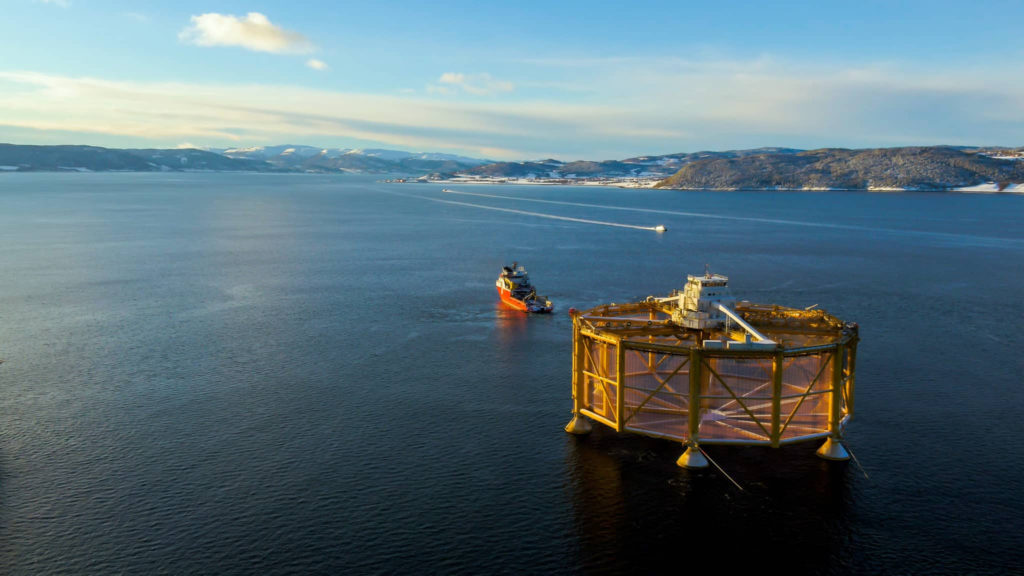
SalMar ASA’s Ocean Farm 1, used to farm very large numbers of salmon in Norwegian offshore waters. The image shows the farm during transportation, removed from the water, emphasizing its size. Photo from 2017. Photo credit: SalMar ASA
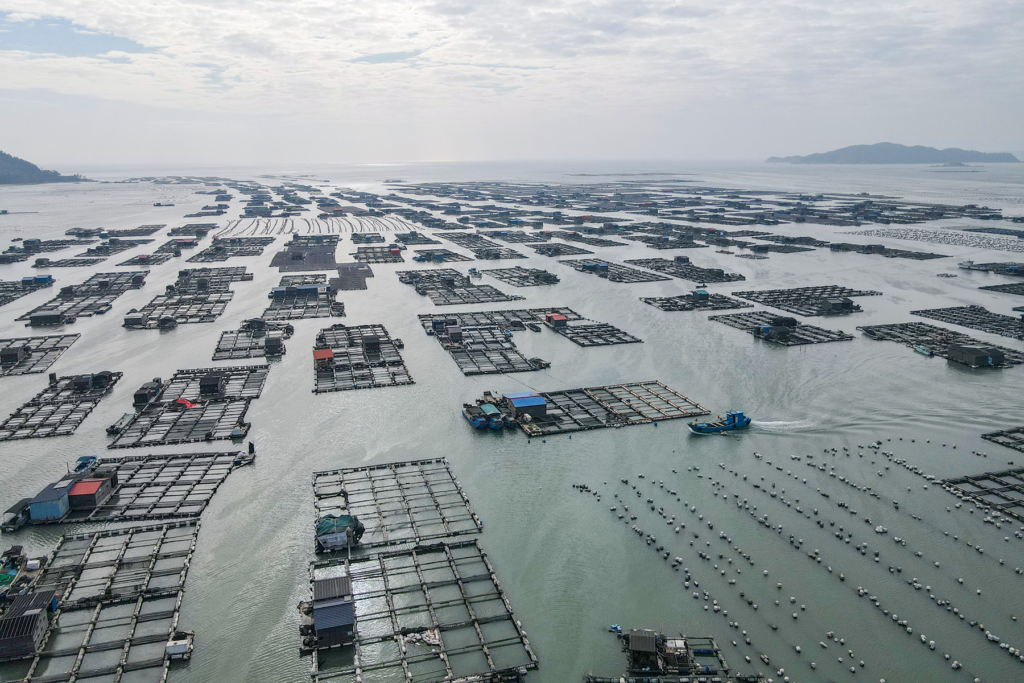
Mariculture (marine organism farming) off Dongshan, Fujian, China, in a bay of the South China Sea. Photo from 2023. Courtesy: Windmemories, Wikimedia

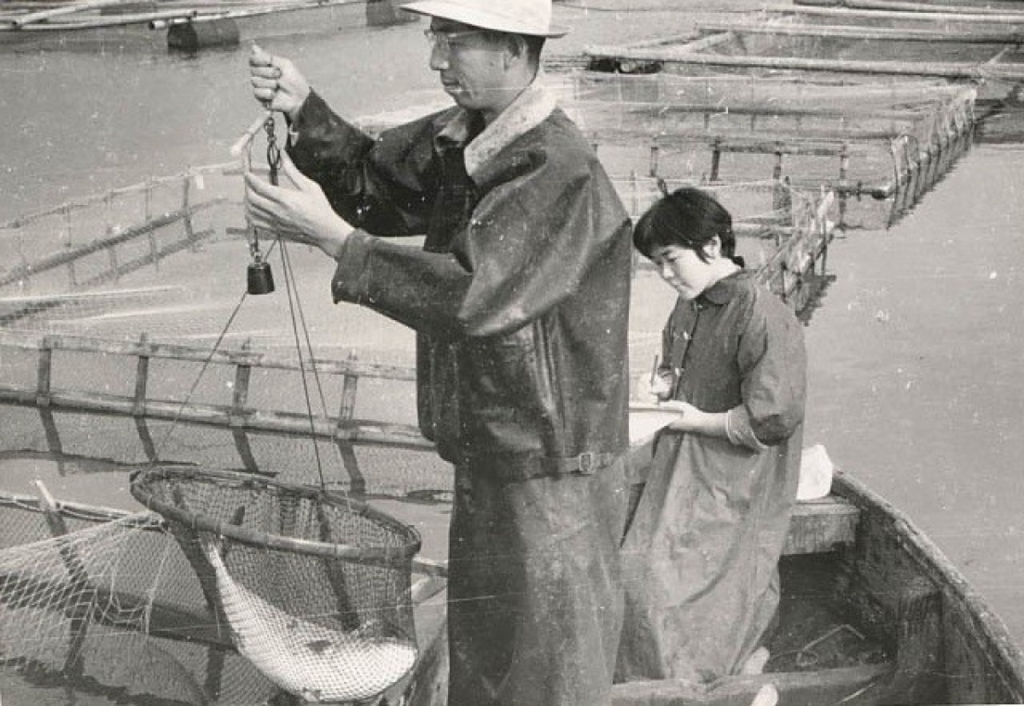
Historical image: Harada Teruo (1926-1991), the Japanese floating net-cage pioneer, and an assistant working at Kindai University’s mariculture test site during the 1950s. Harada’s initial focus was on farming yellowtail/Japanese amberjack (Seriola quinqueradiata). Photo credit: Kindai University, Japan.
Floating Recreational Sites
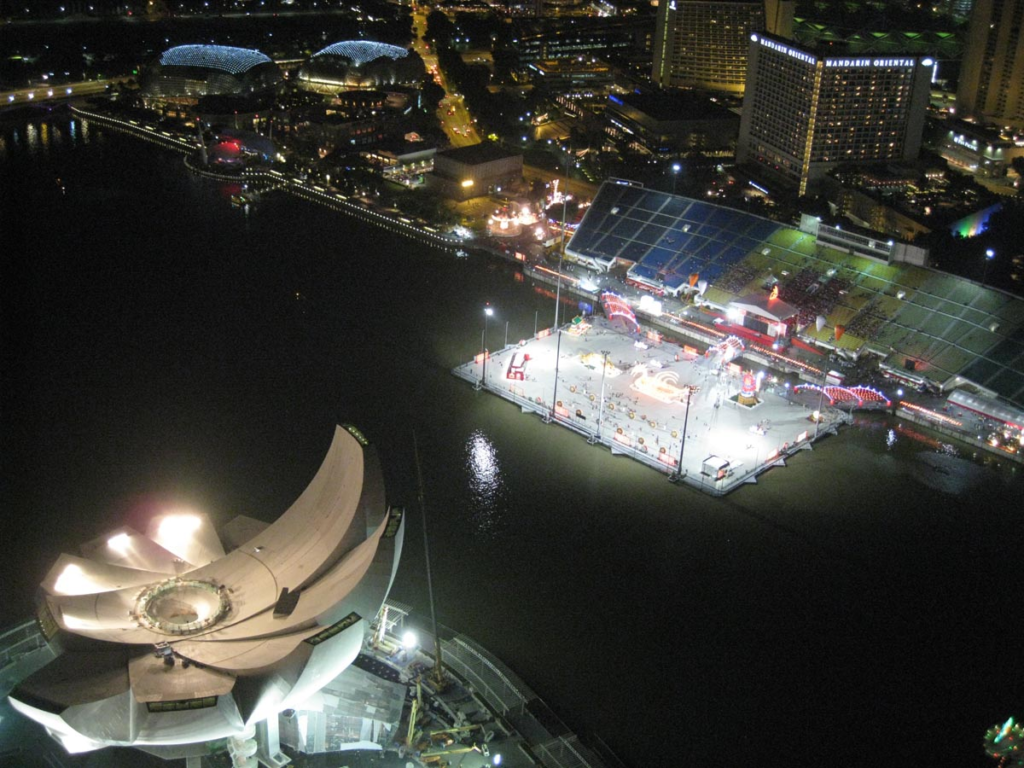
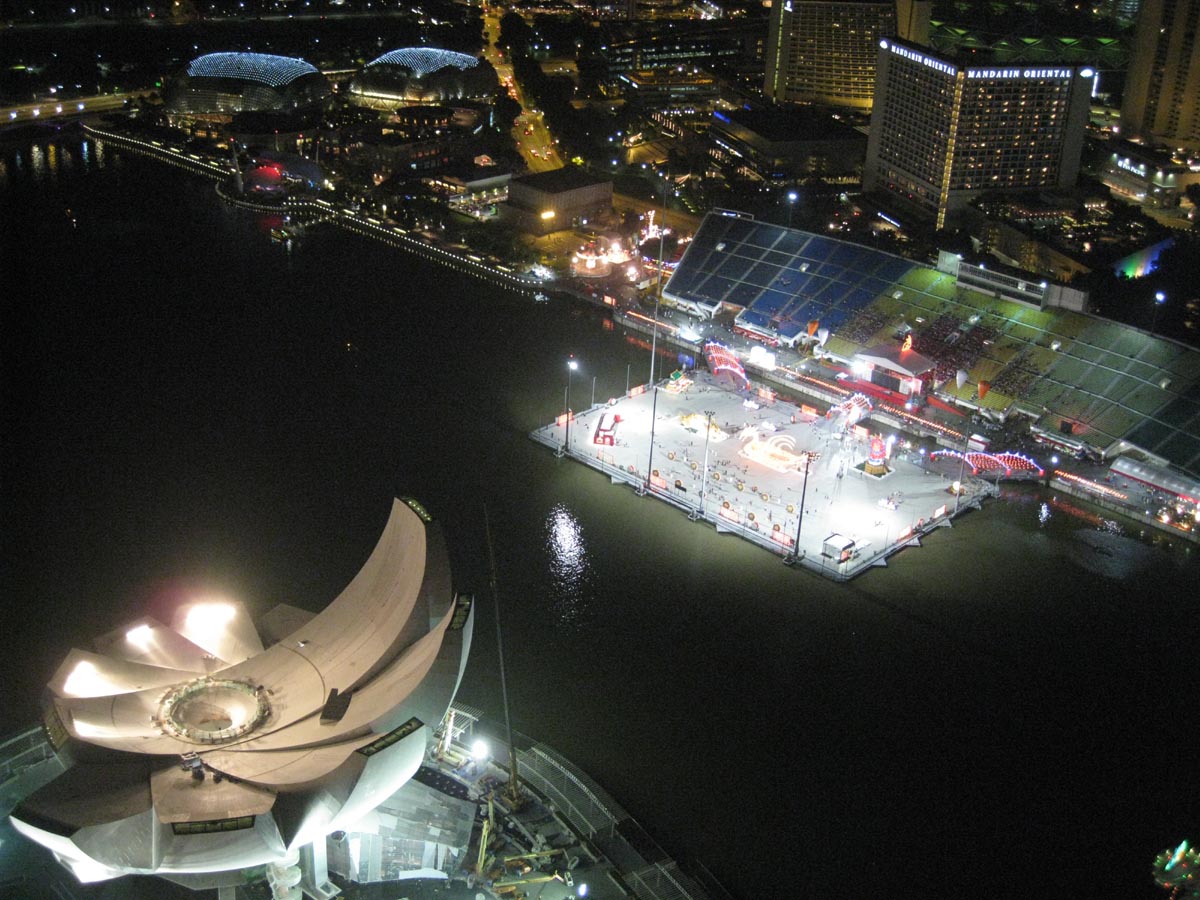
The former Float@Marina Bay (the well-illuminated structure) in Singapore, a floating platform used as a stadium and for public events like the National Parade. Photo from the late 2010s. Photo credit: Dr. Andrew Wang
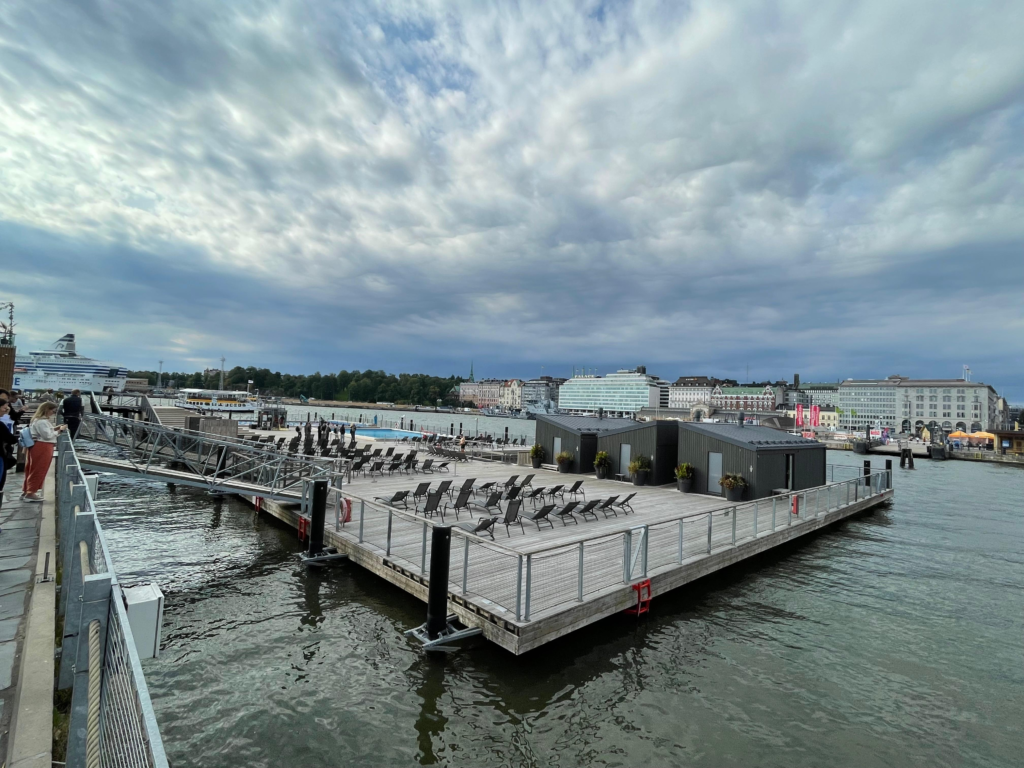
Public floating pools and saunas (Allas Pool) in Helsinki, Finland. While swimming in the ocean and in lakes and rivers is possible, pollution, predators like sharks, very cold water temperatures, or safety risks due to shipping may favor the use of pools. Photo from 2025. Photo credit: Stefan Huebner
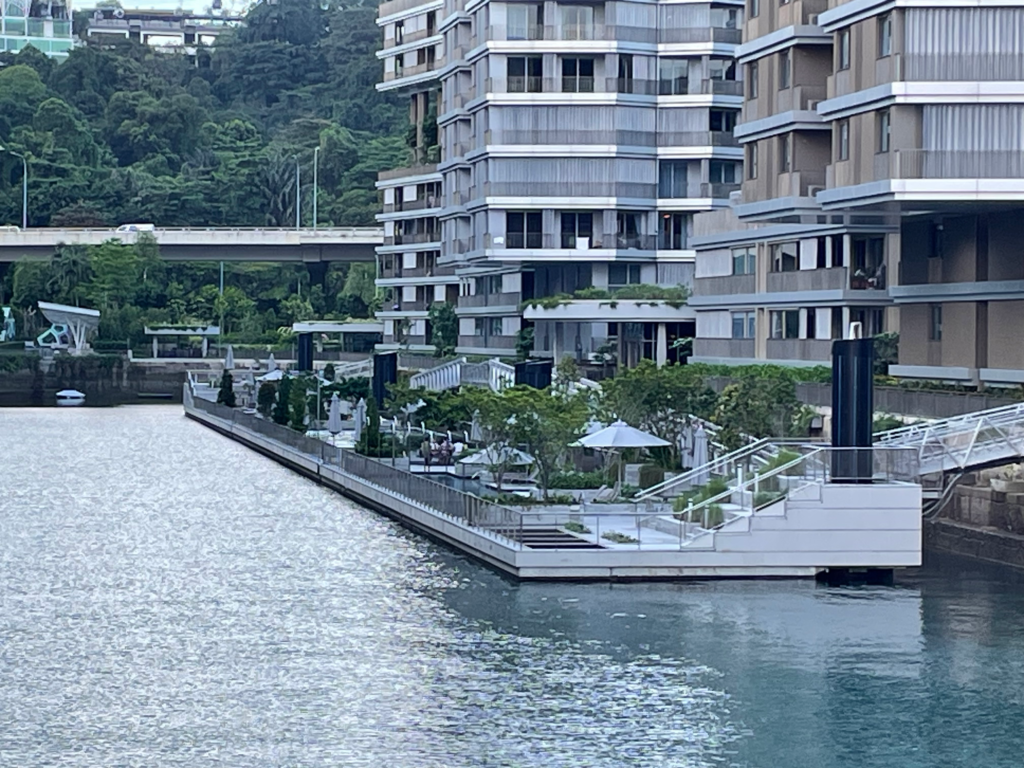
Floating deck with swimming pools at The Reef at King’s Dock (condominium) in Singapore. Photo from 2025. Photo credit: Stefan Huebner
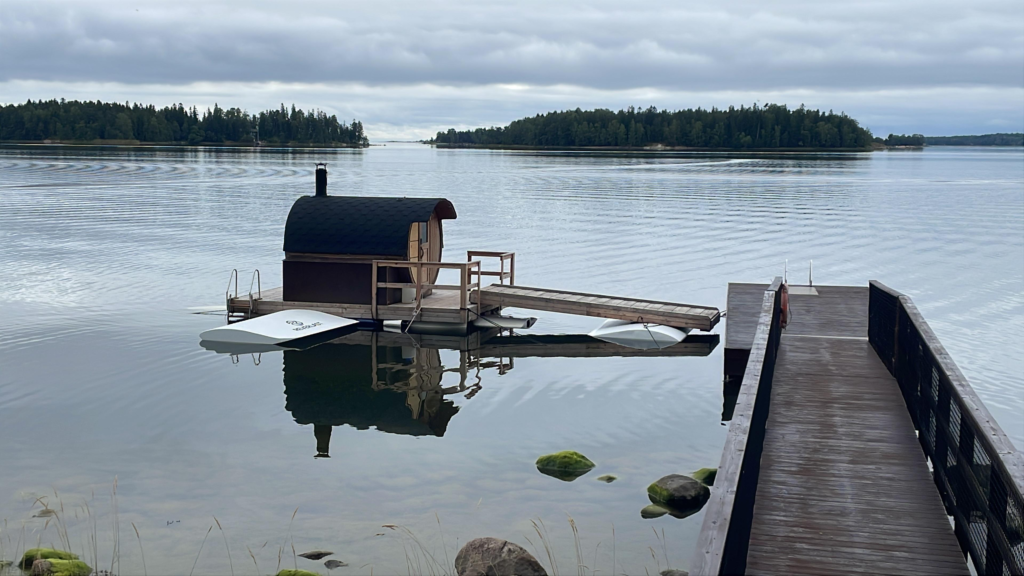
Floating sauna (Reverlast) in Espoo, Finland, at the Fifth World Conference on Floating Solutions (2025). Photo credit: Stefan Huebner

Floating soccer pitch at Koh Panyi (Panyee), a touristic fishing village on stilts in Thailand, where limited space resulted in the construction of this pitch. Photo from 2025. Photo credit: Stefan Huebner
Floating Parks, Greenspaces, and Wetlands
Floating planter project in Copenhagen’s harbor, Denmark
Floating wetlands at the National Aquarium in Baltimore, creating habitat space and enhancing biodiversity (USA)
Floating Commercial and Residential Structures
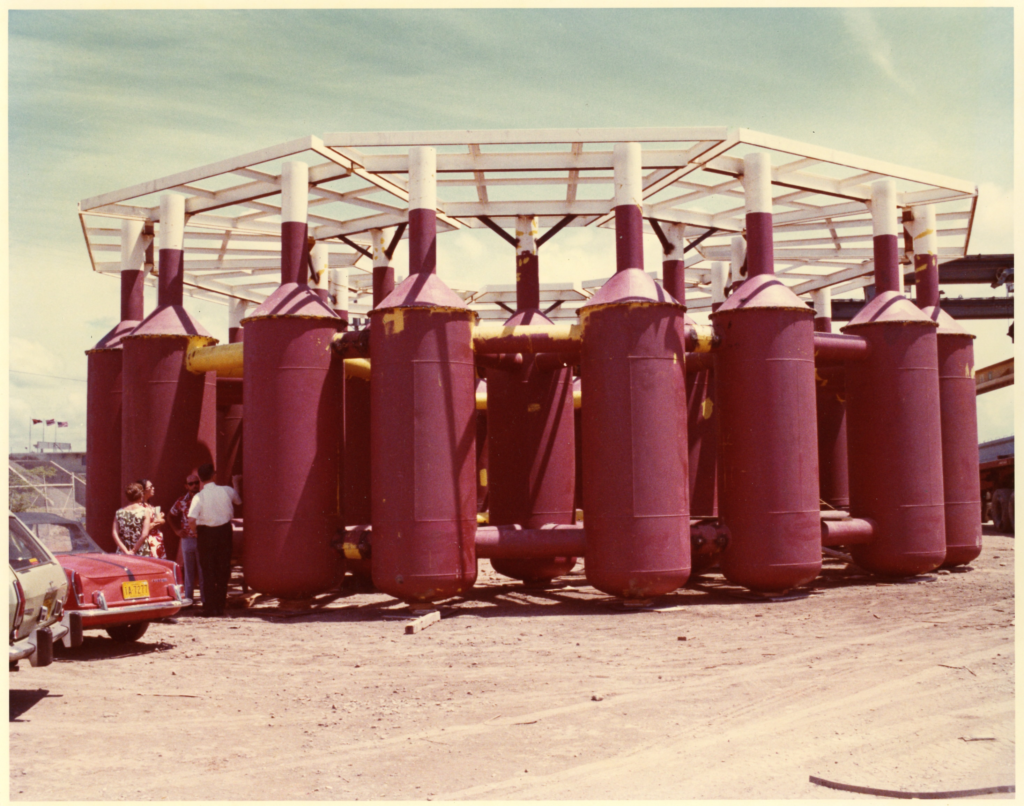
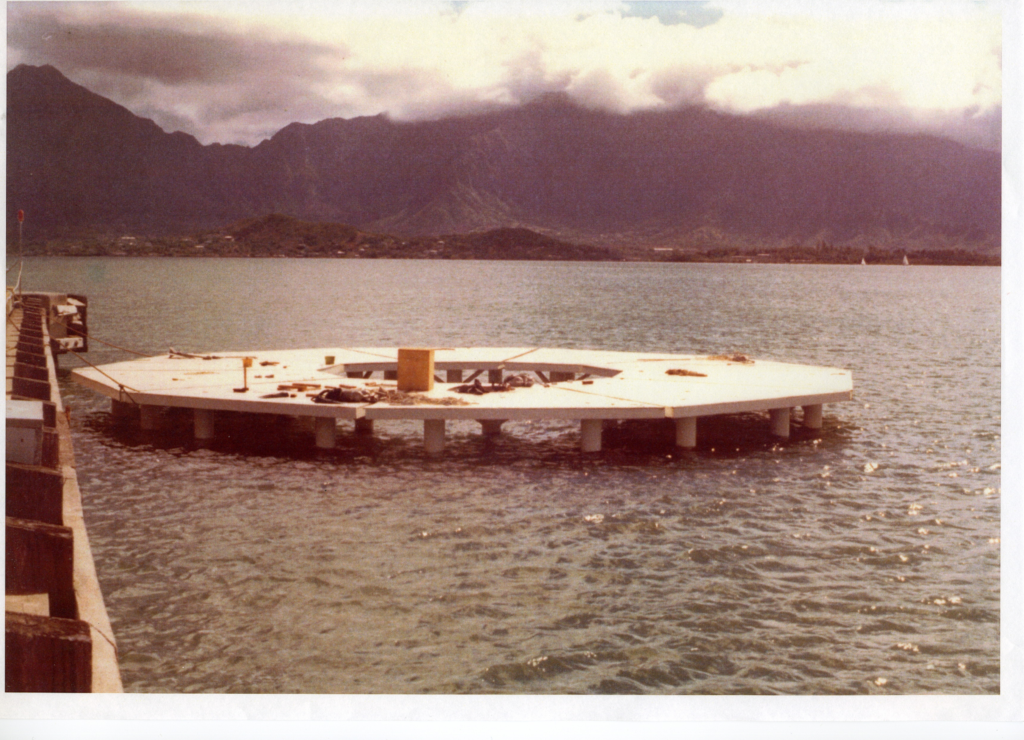
Historical images: Photos of a 1:20 scale prototype of a project to build a floating test site for industrial, recreational, and commercial purposes during the first half of the 1970s in Hawai’i. Structures to be placed on top of the connected platforms are still missing. This “Floating City” project, as it was called, was led by US marine engineer John P. Craven and Japanese architect Kikutake Kiyonori, inspiring the construction of Aquapolis, a floating platform hosting the Japanese exhibition at the 1975 Ocean Exposition in Okinawa, Japan. Photo credit: Dr. Nakajima Toshio
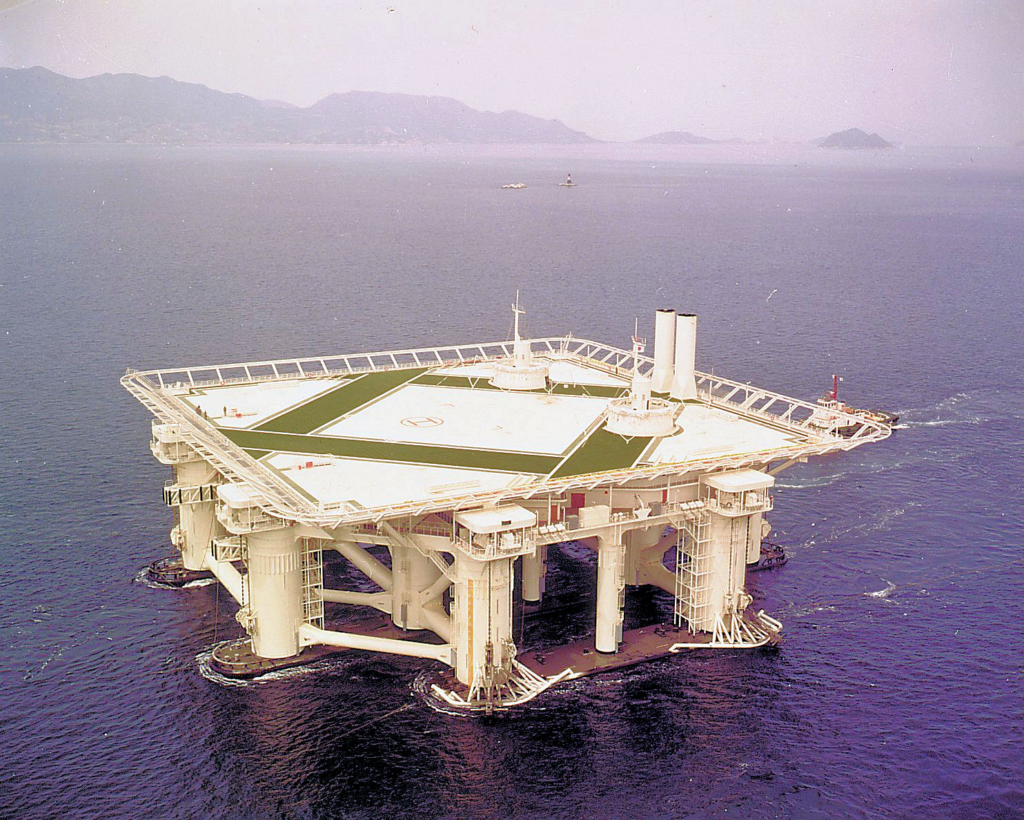
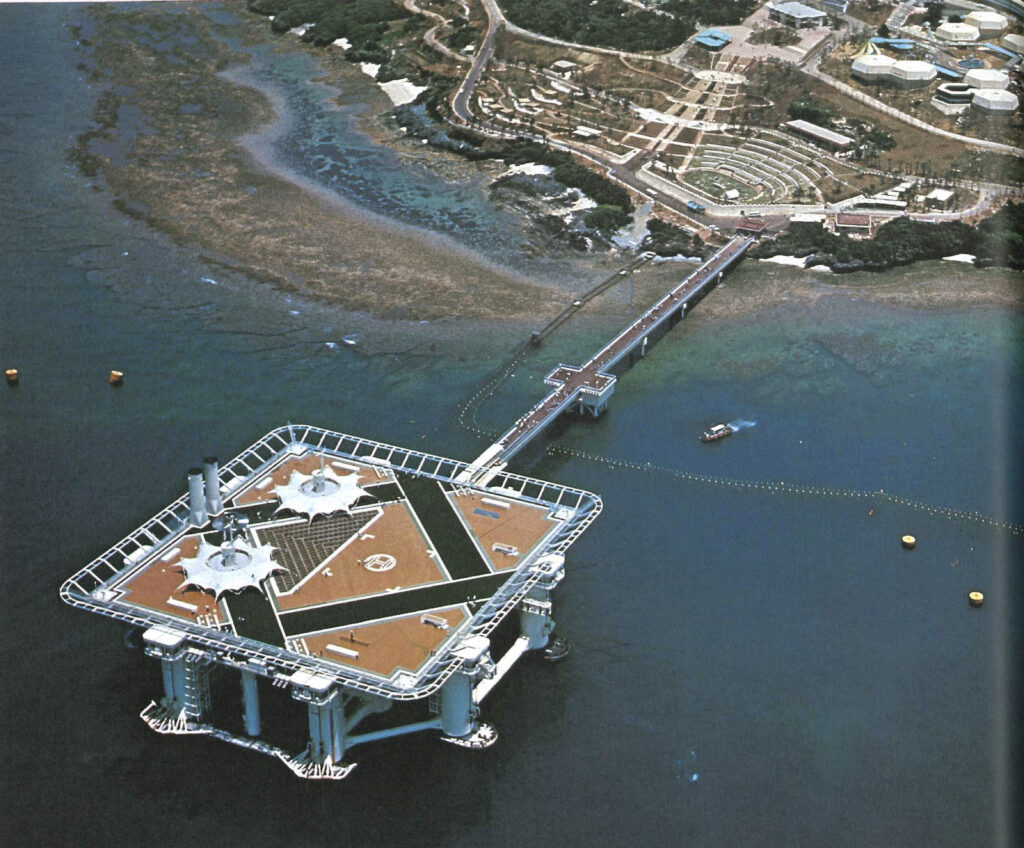
Historical images: Aquapolis, the 100 m x 100 m floating platform hosting the Japanese exhibition for the 1975 Ocean Exposition in Okinawa, Japan. Sometimes called a “floating city” project, Aquapolis was built by Japanese architect Kikutake Kiyonori and a committee involving several major Japanese companies to exemplify Japanese offshore platform construction skills, hosting the Japanese exhibition on advances in ocean research. One photo shows Aquapolis connected to the Expo grounds and the adjacent fish farm demonstration site. The other photo shows Aquapolis floating, being able to be delivered to its destination in Okinawa, Japan. Photo credit: Japanese Ministry of Economy, Trade, and Industry; Dr. Nakajima Toshio
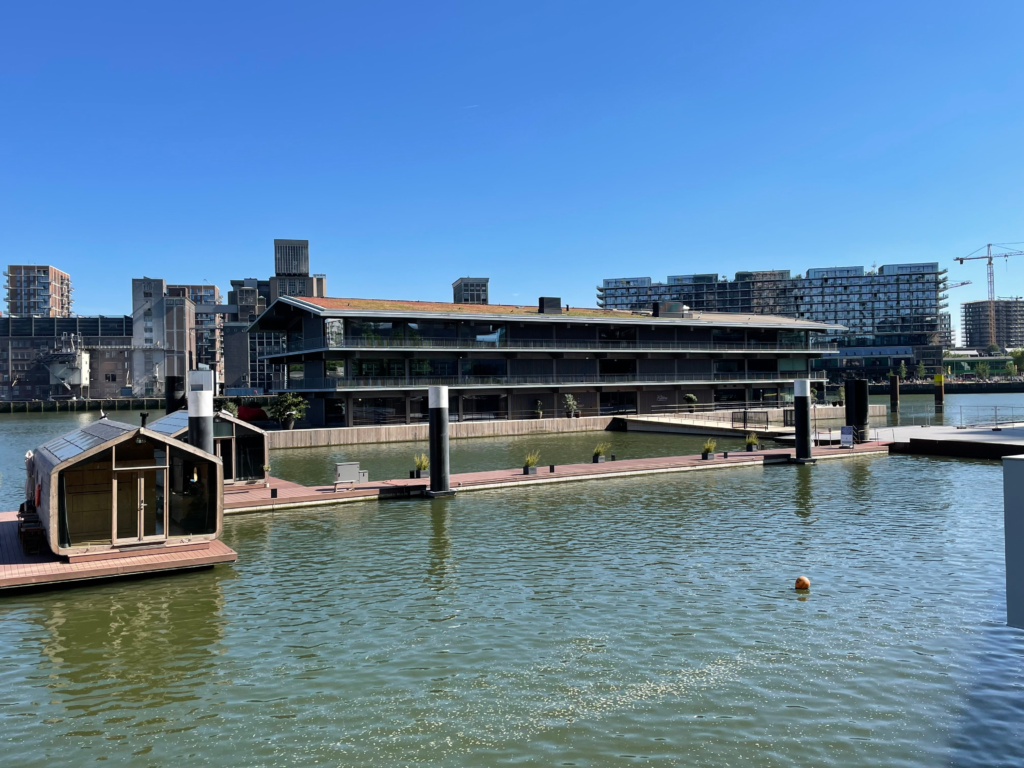
The Global Center on Adaptation’s floating office in Rotterdam’s Rijnhaven (former port) in the Netherlands, illustrating floating structures as a form of climate adaptation to rising sea levels. Floating tiny houses can be seen to the left. Photo from 2023. Photo credit: Stefan Huebner
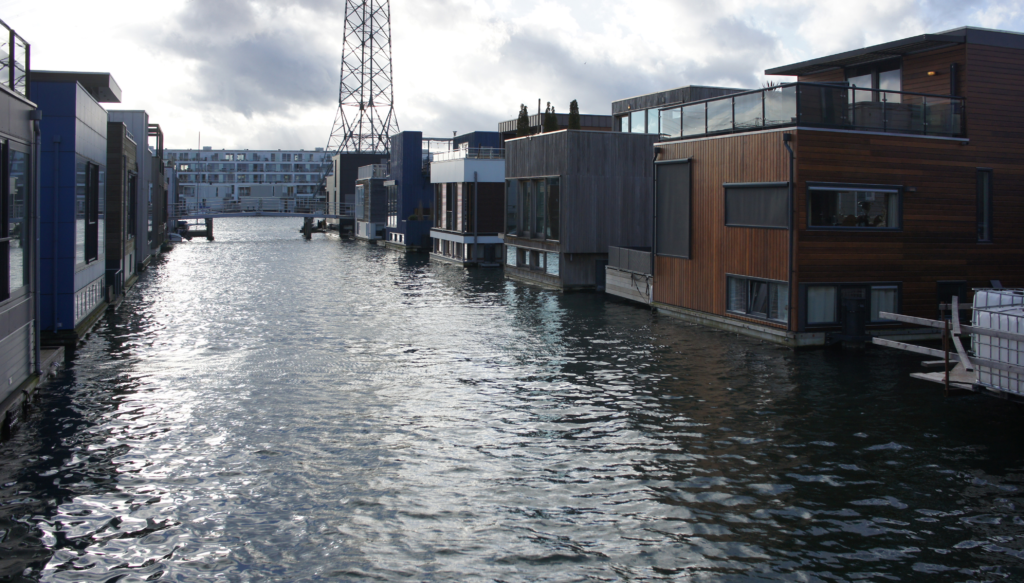
Floating homes neighborhood developed as part of the IJburg city expansion in Amsterdam, the Netherlands, providing an alternative to IJburg’s primarily used land reclamation. Photo from 2016. Photo credit: Dmitry Eliusee on Wikimedia
.jpg)
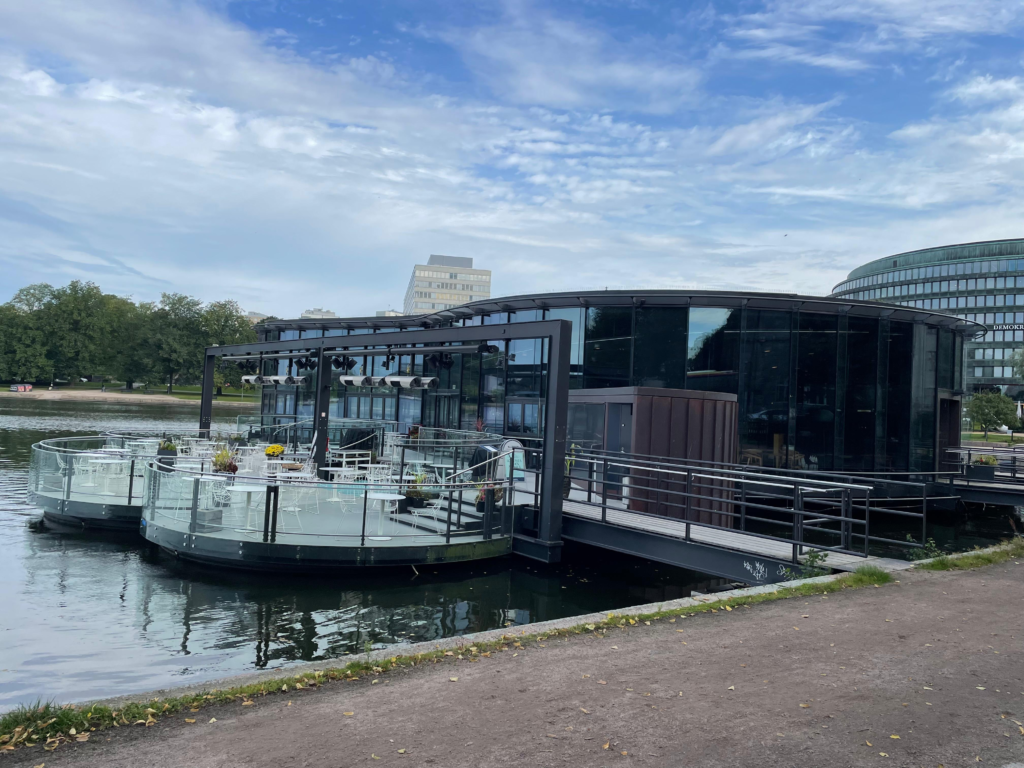
Floating restaurant (Ravintola Meripaviljonki) in Helsinki, Finland. Photo from 2025. Photo credit: Stefan Huebner
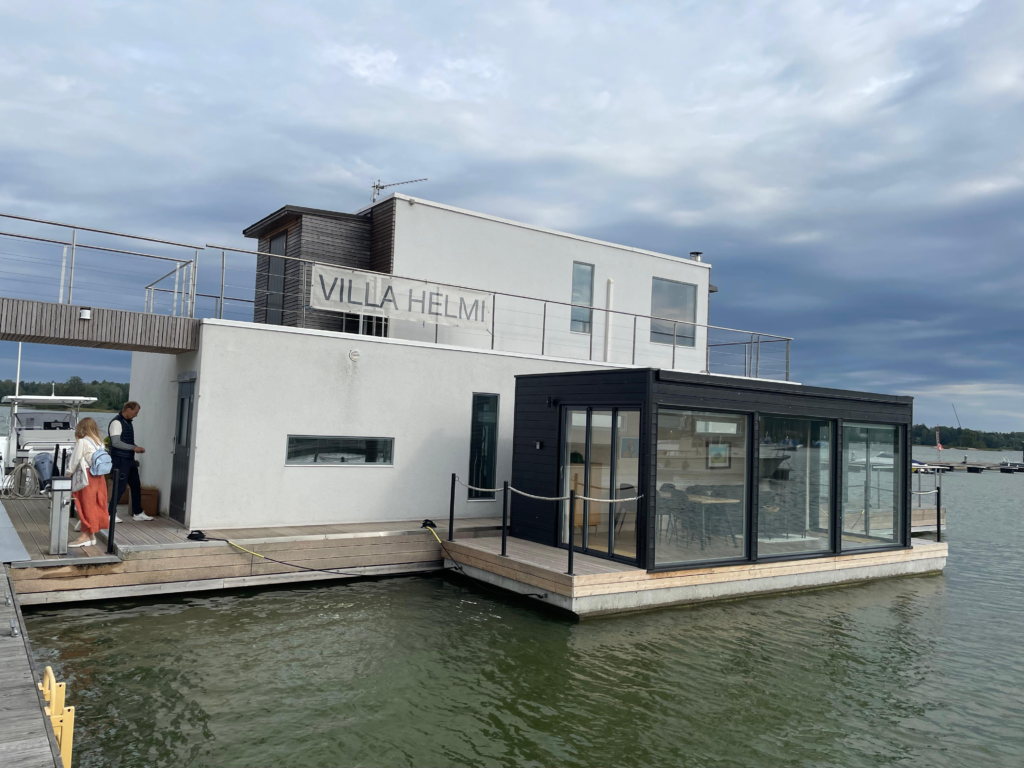
Villa Helmi, an event site and vacation home in Espoo, Finland. Photo from 2025. Photo credit: Stefan Huebner
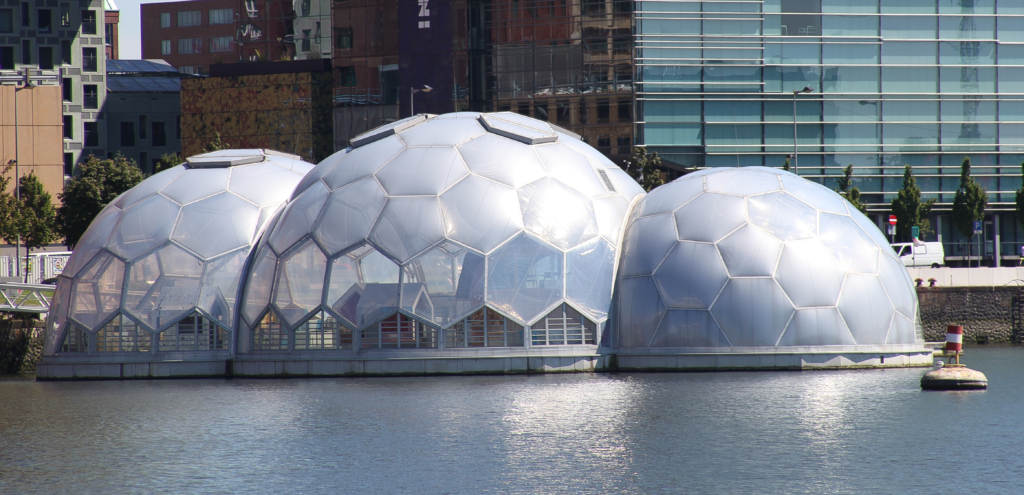
The floating pavilion in Rotterdam, usable for multiple purposes and relocatable to other locations. Photo taken in 2012 when the pavilion was located in the Rijnhaven (former port), before it was moved to Schiehaven and then Dokhaven at RDM Campus, where it is now reused as an energy transitions hub to teach students. Photo credit: Rick Ligthelm on Wikimedia
.jpg)
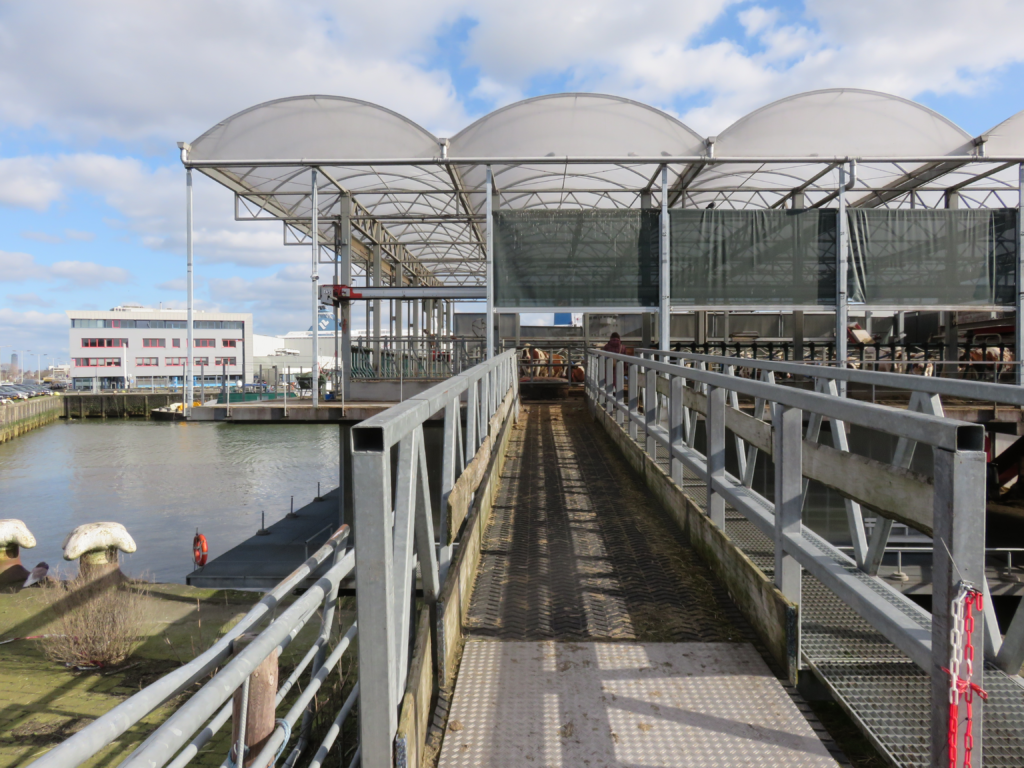
Floating Farm in Rotterdam, the Netherlands, in the Merwehaven. The farm delivers dairy products to the city and can use certain urban wastes, such as grass from parks. Photo from 2024. Photo credit: Marcel Douwe Dekker on Wikimedia

San Francisco’s Floating Fire Station No. 35 for waterborne firefighting rises and falls with water levels, enabling equipment storage and anchoring of multiple fireboats.

Nautilus Data Technologies’ floating data center in Stockton, California, USA. The data center can take in water from the river for server cooling and later discharge it at a slightly higher temperature, reducing electricity costs for cooling. Image from 2025. Image credit: Google Maps. Imagery: Airbus, Maxar Technologies.
Floating Bridges
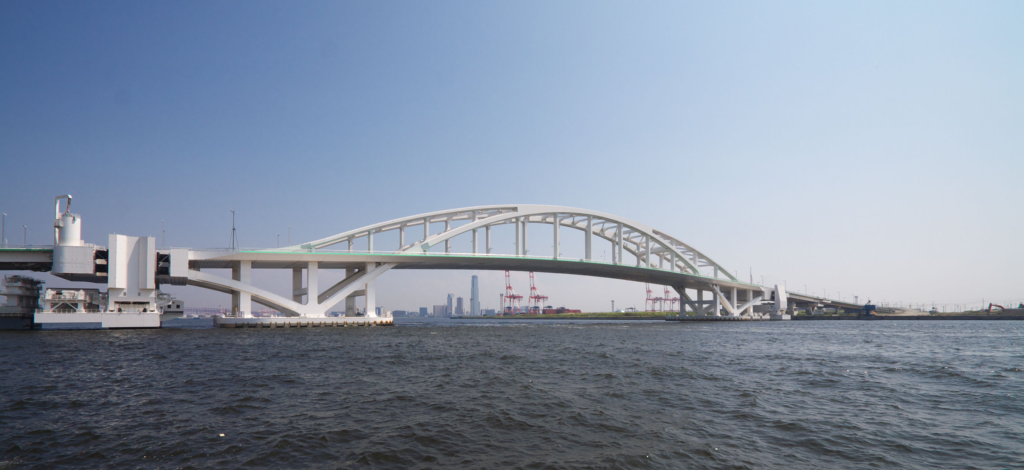
Yumemai Bridge in Osaka’s port, Japan, bridging two islands, Yumeshima and Maishima. The bridge can be swung by tugboats to widen the passage for larger vessels. Photo from 2007. Photo credit: ignis on Wikimedia.
.jpg)
Rocket Launch Platforms
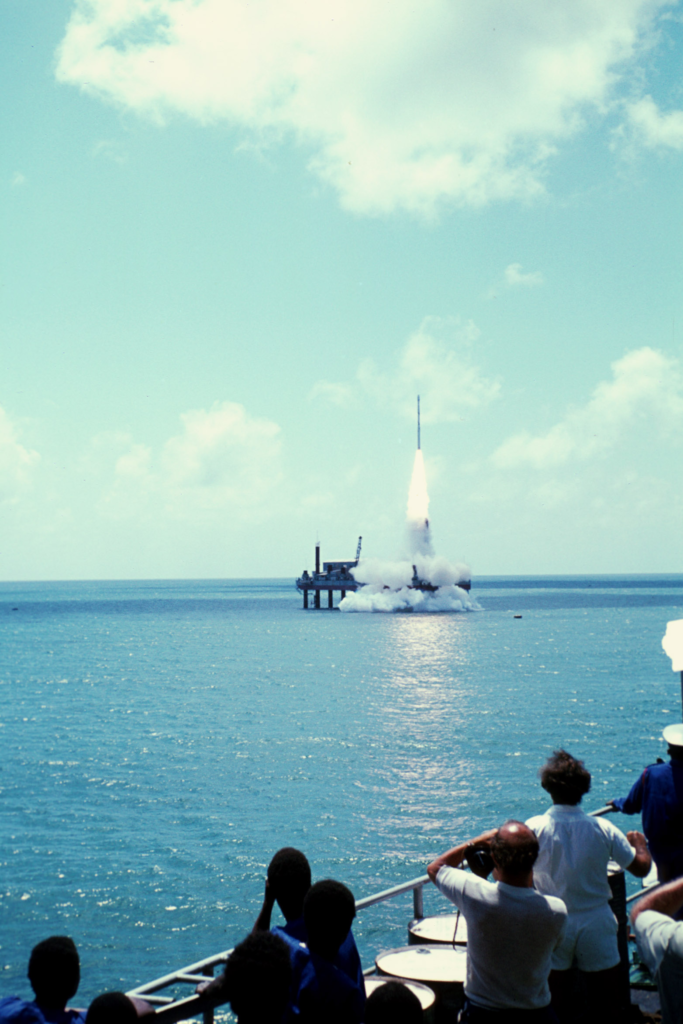
Historical image: The former “San Marco” offshore launch platform, a jack-up barge (floating for movement or extending its legs and standing on the seabed during launches), which launched multiple rockets for the Broglio Space Center (operated by Sapienza University of Rome and NASA) in Kenya. The equatorial launch site reduced launch costs for bringing satellites into specific orbits. Photo from 1974. Photo credit: NASA on Wikimedia

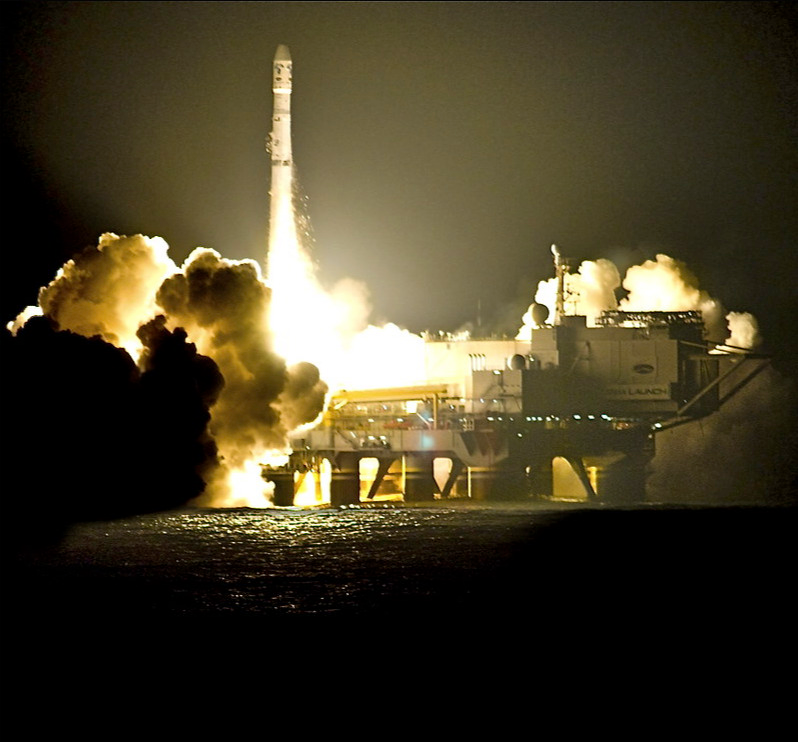
Historical image: Nighttime rocket launch from Sea Launch’s offshore launch platform on 20 April 2009, operating in the near-equatorial Central Pacific, with its home port at Long Beach, California, USA. Photo credit: Steve Jurvetson, https://www.flickr.com/photos/jurvetson/3460124131/.
Floating Oil and Gas Platforms/Infrastructure
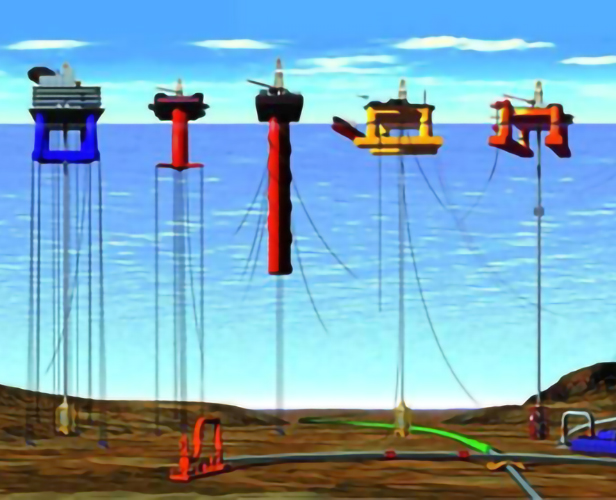
Simplified image of several types of offshore oil and gas platforms. Left and center-left: tension-leg platforms. Center: spar platform. Center-right and right: semi-submersibles. Though not shown on the image, the platforms are designed to operate in very different water depths. Image credit: Modified version of National Oceanic and Atmospheric Organization (NOAA) on Wikimedia.

Vernacular Floating Homes and Other Buildings
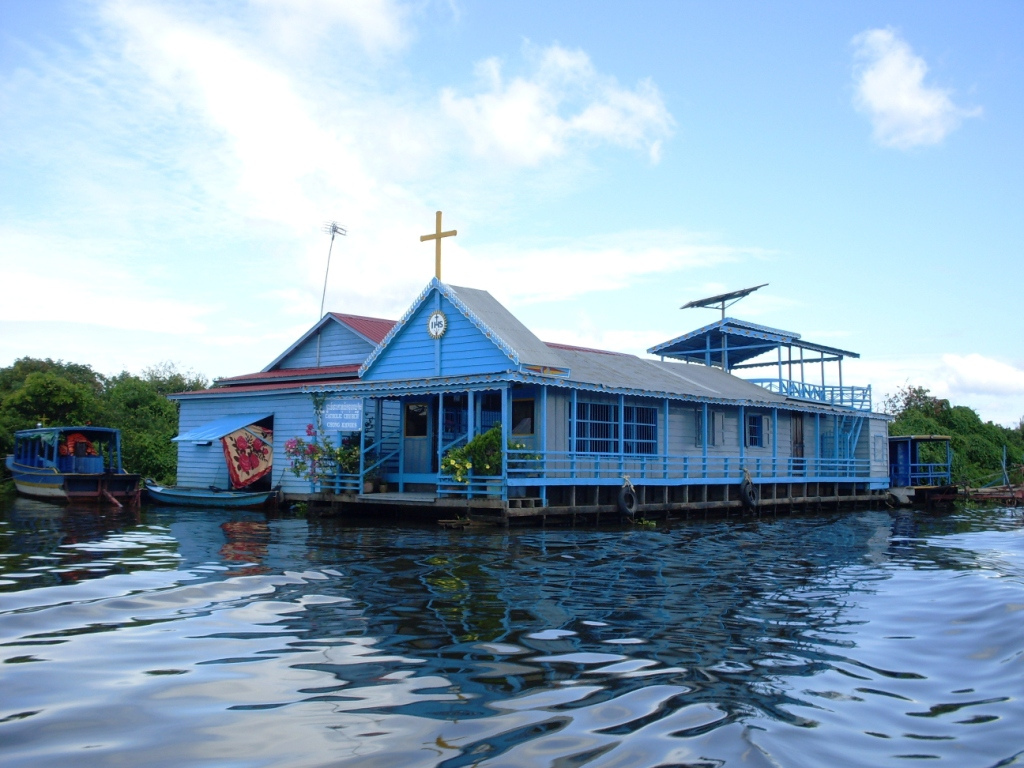
A floating Roman Catholic church in the Chong Khneas floating town in Tonle Sap Lake in Cambodia, adapting to strong monsoon-related water level changes during the course of the year. Photo from 2009. Photo credit: A. Omer Karamollaoglu on Wikimedia

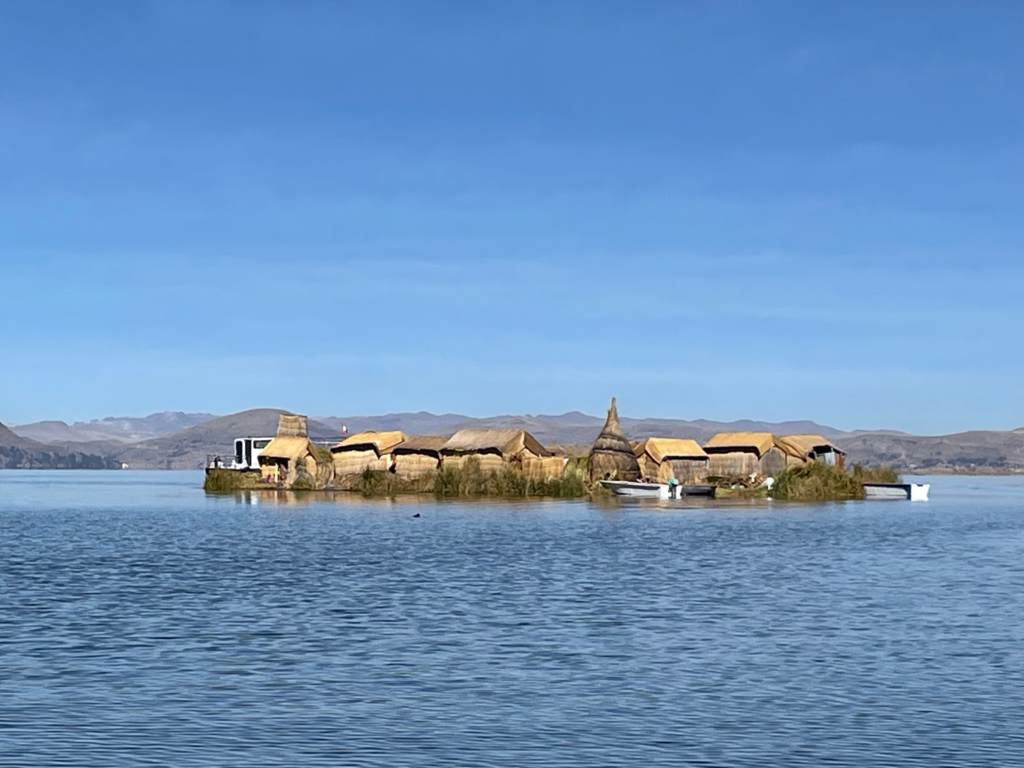
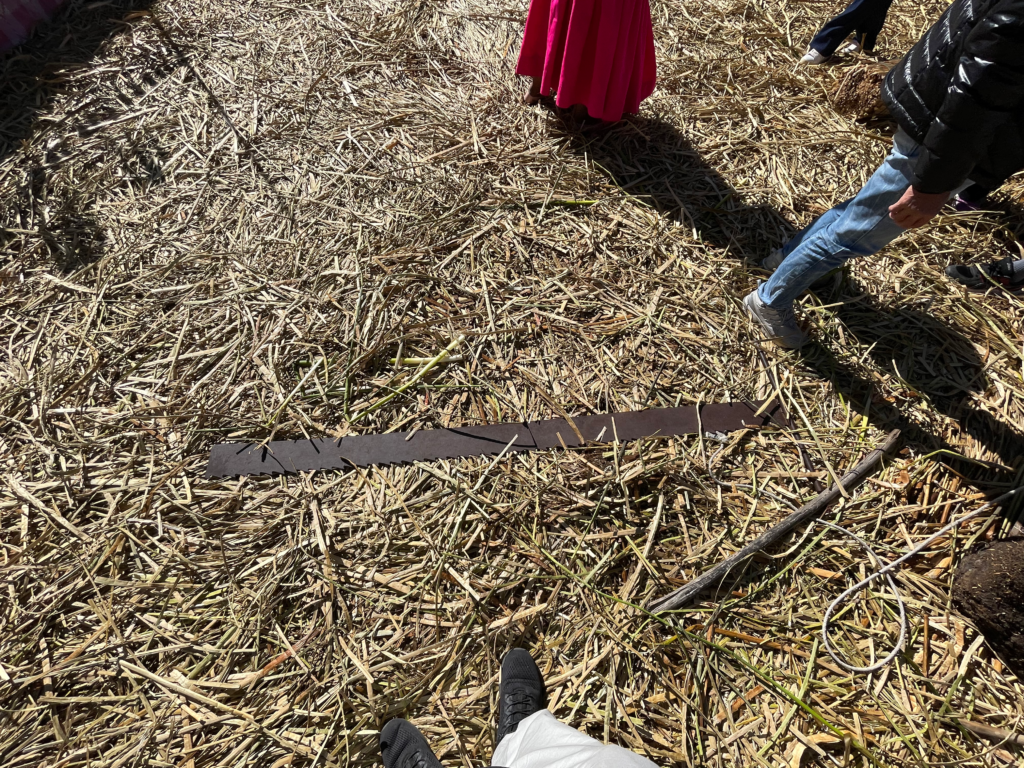
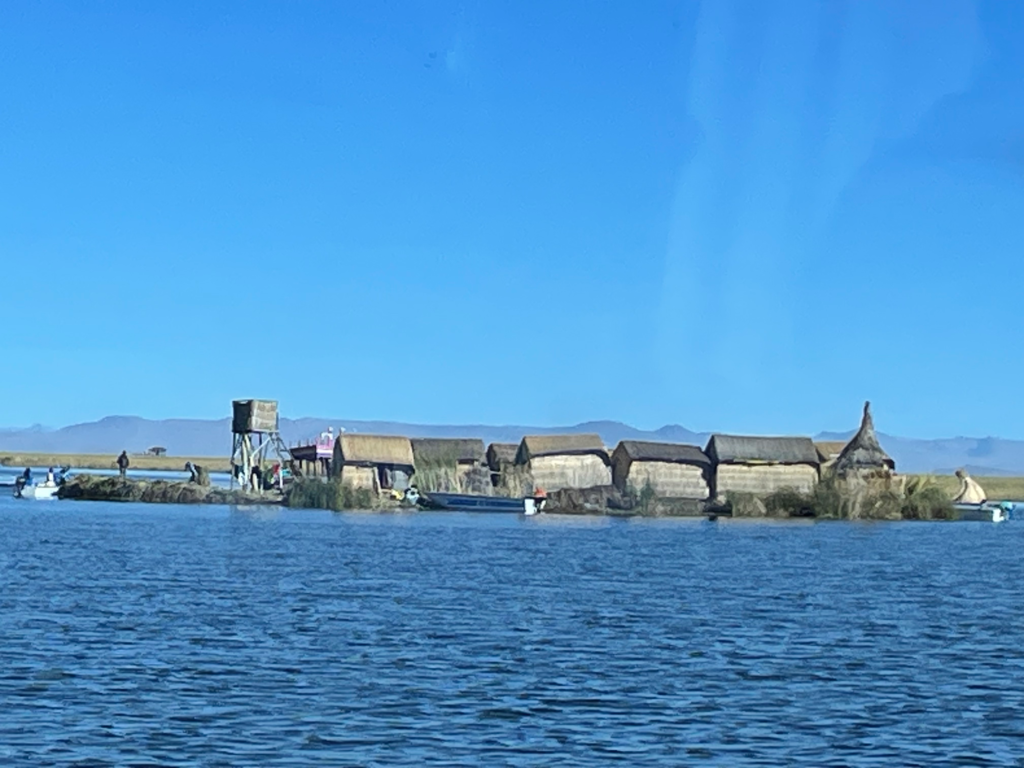
Floating reed islands and buildings in Lake Titicaca, Peru. Reed from the lake is used to adapt to water level changes over the course of the year. Photo from 2024. Photo credit: Stefan Huebner
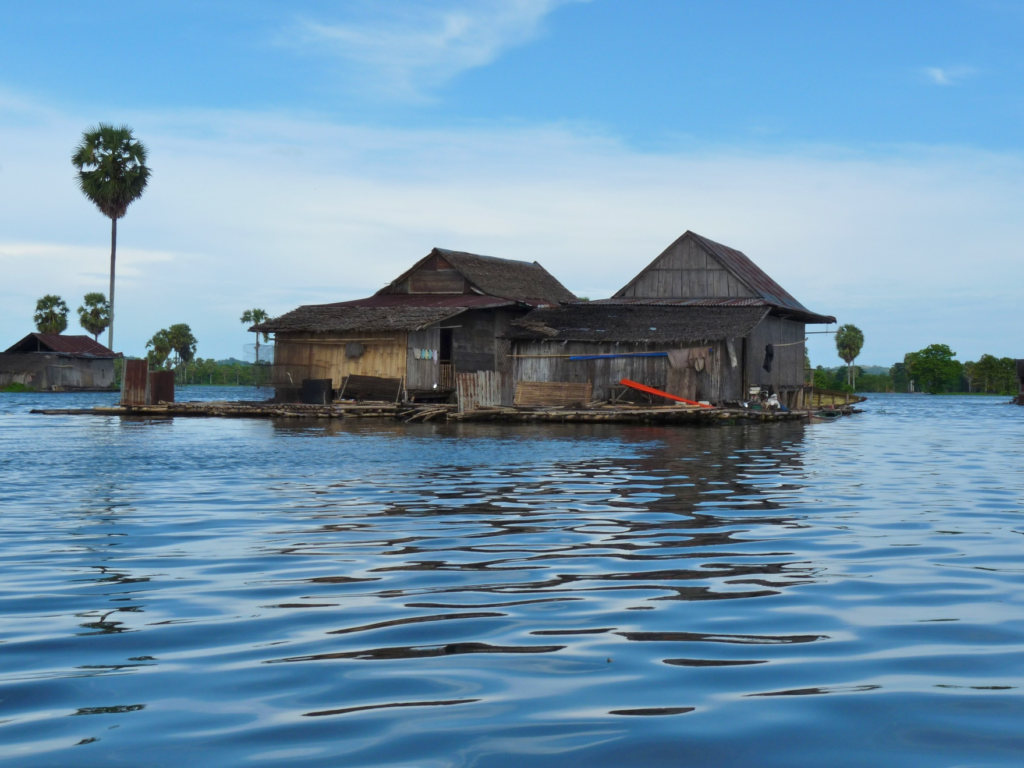
Floating home in Lake Tempe, Sulawesi, Indonesia. The floating building adjusts to strong water level changes over the course of the year and can be relocated to facilitate fisheries. Photo from 2010. Photo credit: Francesc Genové on Wikimedia

Information largely based on:
- Stefan Huebner, “Floating and Stilted Structures as Strategies in Coastal Climate Adaptation: Local Monsoon Adaptation Practices and Implications for Flood Risk Management,” Climate Risk Management 49 (2025): 100719.
- Stefan Huebner, “Coastal Urban Climate Adaptation and the Advance onto Aquatic Surfaces Using Floating Solutions: Historical Challenges and Potential Future Benefits of Floating Homes and Similar Structures,” Ocean and Coastal Management 261 (2025): 107433.
- Stefan Huebner, Earth’s Amphibious Transformation. Past and Present of the Oceanic Anthropocene (Cambridge: Cambridge University Press, 2026).